

When you’re distracted during meditation*, your mind is kind of ‘zoomed in’ on the distraction, as depicted in this lovingly and painstakingly hand-illustrated graphic:
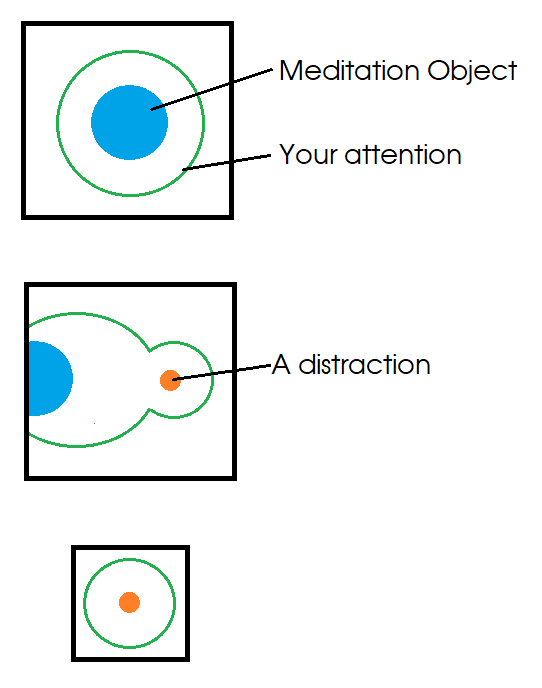
The thing that allows you to notice the distraction as a distraction, is a kind of zoom-out.
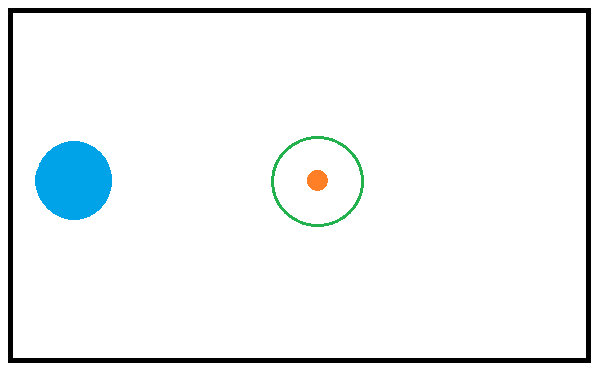
Your attention is on the distraction, and you know that your attention is on the distraction. You’re no longer defined totally by the object of your attention.
You’re bigger than your attention; you can notice what your attention is doing, maybe even notice the effect this is having on you, on your mind states, and perhaps even your sense of self.
Wow!
The knee-jerk reaction is to go “oh wait that’s not where my attention should be” and zoom right back in—only this time on the meditation object.
And particularly to zoom in harder and more intensely so attention doesn’t get captured again. This feels like it’s going in the right direction because when you’re zoomed in, you’re less in touch with potential distractions.
But when you try to fixate harder on the meditation object by squeezing your frame closer around the meditation object, it closes off this wider perspective.
At first this doesn’t feel like an issue – attention is on the meditation object. But when it begins to get captured, without that wider frame (the zoomed-out perspective), you won’t have that meta-level ability to notice the capture.
What Do?
So at the moment of one of these instances of zoom-out, of noticing that you’re distracted, instead of zooming in again, just take a few seconds to notice and appreciate the zoomed out state, where you can feel the pull towards the meditation, and the pull towards the distraction, but not get identified with either.
Just to stress this point, which can feel counterintuitive: this requires not getting hooked by the pull to zoom in on the meditation object just as much as not getting hooked by the pull to zoom in on the distraction.
The pull towards the distraction can feel like there’s something juicy or important to think about. The pull towards the meditation object can feel like frustration with oneself for getting distracted, or maybe a strong resolve not to get distracted again.
From the wider frame of awareness, you can feel both, not get identified with either, and still choose to direct attention towards the meditation. It’s not that the resolve to keep attention on the meditation object is wrong or bad – that’s useful energy, and a beneficial intention, but you don’t want to let it collapse your wider frame.
You can redirect attention to the meditation object, but without losing the bigger zoomed out perspective.
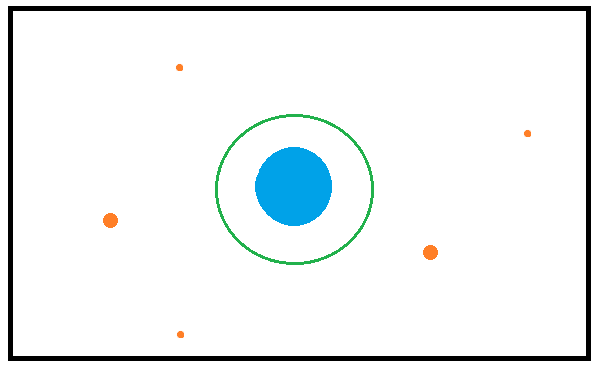
Then, when distractions start to pull at your attention, you can just notice them and elect to not put any more attention there. They’ll probably still pull a bit of attention, unless you’re really in the groove, but that’s fine. You know it’s happening as soon as it happens, or at least pretty quickly, and it’s not capturing you in the “zoom in” kind of way.
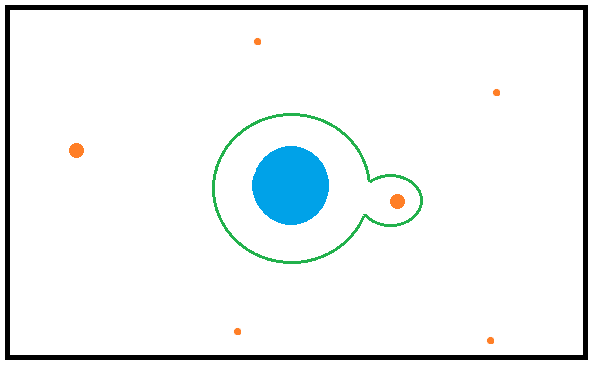
From a zoomed-in frame on the meditation, distractions feel like enemies and ignoring them feels like a battle. From the wider frame, that space can be kind, loving, able to hold whatever pulls at your attention with a spacious warmth that simply allows, and doesn’t get pulled in. And that’s the really valuable thing.
How To
Establishing the wider frame stably takes practice and lots of repetition.
Here are the steps again:
- When you catch yourself in distraction, take a moment to notice the zoom-out that allowed you to catch it. This moment of opening can pass you by quickly and appear unremarkable, so really intend to mark it.
- Feel the pull towards distraction and the pull towards the meditation object. Notice that from this wider frame, you can contain both, without collapsing into either. Wow! So cool! So spacious. Ahhh 😌 Allow yourself to enjoy, appreciate, and encourage the spaciousness for however long feels right.
- Direct the energy of your attention back to the meditation object, but gently intend to keep the wider frame open. Notice how this this wider frame brings more ease.
That’s it! The wider frame will collapse a lot (like, a lot), but over time as you get better at noticing and appreciating it, it will become more and more stable. Which is good.
More resources to understand and get the hang of this key difference here.
*This mostly just applies to focused attention type meditation practices
