
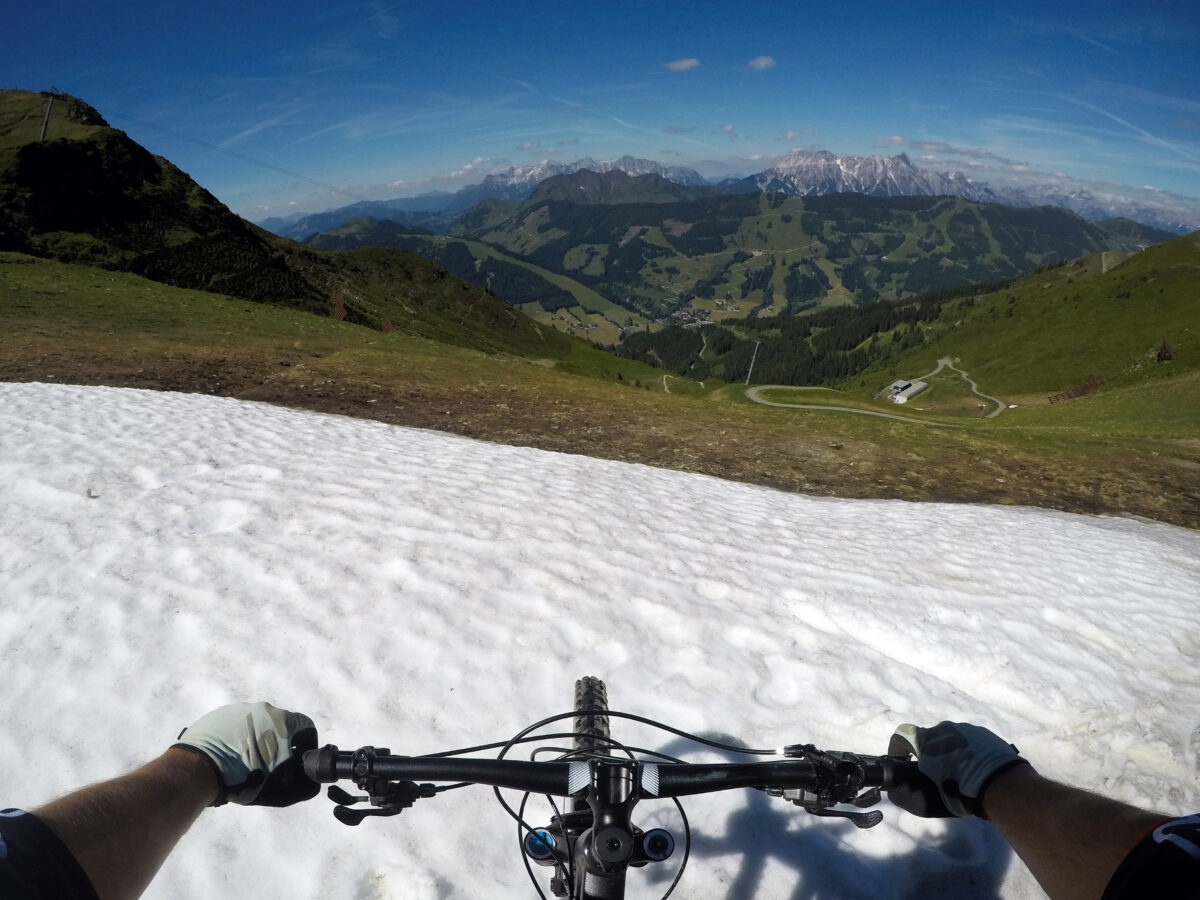
In meditation, there’s often a sense of needing to go uphill to get somewhere; to overcome subtle dullness, open or maintain awareness, view things through a particular insight lens, or whatever it is that you’re working on in your practice.
It feels like “things will roll back downhill if I don’t keep pushing.”
But this sets up a self-confirming view of the mind as something unruly, stupid, or bad. If distractions arise, dullness increases, awareness collapses, or whatever, then it must be because that’s the default state of the mind reasserting itself. You let your guard down, you relaxed that effort, and so things started rolling back downhill, back to baseline – back to how the mind naturally is – which is distracted, dull, and deluded.
I find that a prompt which very often clicks for people is this: whatever you happen to be practising in meditation, try to find a downhill path to get there.
In other words, you notice the ways in which the mind wants more vividness, more unification, insight, etc. How those things feel good, feel right, undercut suffering, lead to a sense of release, lightness, and joy.
Because the wonderful thing about the mind is that unification/samadhi/concentration, insight, and love all do actually feel really good, and the mind naturally wants to spend more time there and go deeper when it gets a taste.
Imagine the difference between a teacher who thinks that you’re a little shit who needs constant supervision to be kept in line, versus a teacher who can see your potential and is delighted by it, encourages it, trusts it.
When you trust that there’s a groove the mind can fall into that aligns with your practice goals, then you don’t have to constantly feel like you’re standing outside of your mind, pushing it up a big hill like a cart full of bad habits. You can start feeling more like you’re riding it downhill, and your practice is more like finding a good route. It may not be obvious, and it might require some exploring and playing to find, but it’s there.
This also doesn’t mean that practice should always feel effortless – there are some types of effort that feel more downhill than doing nothing, like how making some food is easier than abstaining when you’re hungry.
And of course some habits of the mind will still have momentum; some parts of the mind haven’t seen clearly, don’t know what’s on offer in terms of the fruits of practice, but this is your opportunity to let the beauty and naturalness of the downhill path sink in, by really taking in and savouring the fruits of practice. It takes time and repetition, but doing this is like getting better and better at finding the downhill paths. You’ll feel lighter, freer, more spacious; things feel more spontaneous and less effortful.
The mind isn’t something you have to fight, because it isn’t defined by its habits. Getting caught up in habitual grasping and conceptual fixation takes huge amounts of energy – that’s the uphill path, not the movement towards insight into the nature of mind. The more you’re able to experience the nature of the mind clearly, unobscured by habitual involvement with concepts and appearances, the more it will be clear that your most basic nature is clarity, openness, and love. This basic nature is like gravity, pulling you towards what’s true; you can trust it.
